Reed arch hall
Born in Mesopotamian marshes, southern Iraq.
How it works
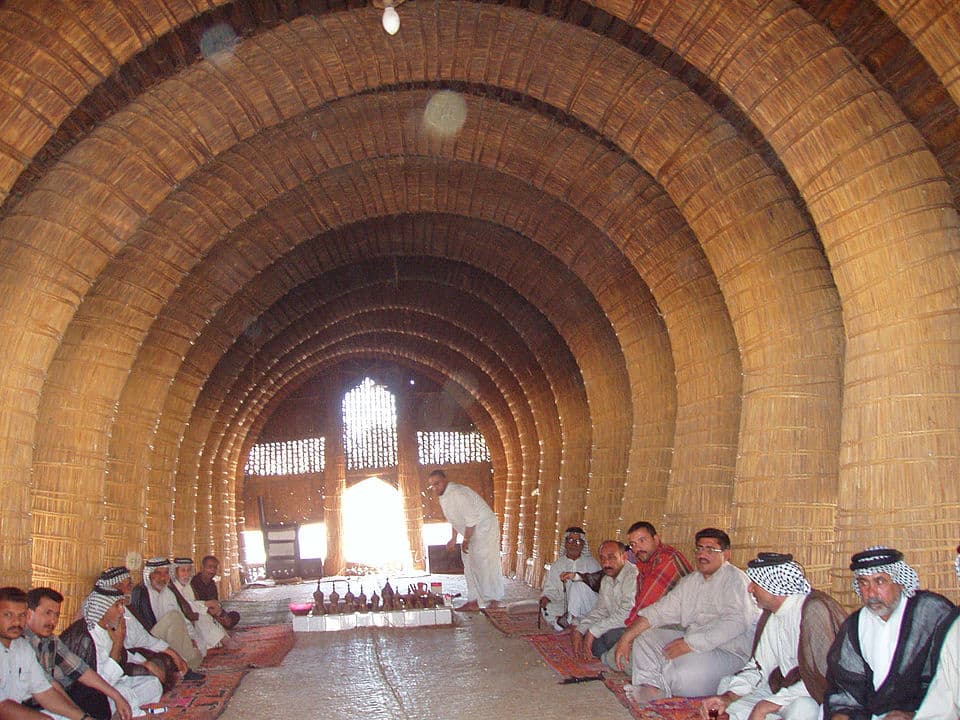
Giant bundles of marsh reed are bent into parabolic arches and lashed with woven reed mats. The whole hall is grown, cut and rebuilt from a renewable marsh, breathes through its woven skin, and can sit on a reed island raised above the flood.
Where it came from
The reed halls of the Marsh Arabs (the Ma'dan) of southern Iraq repeat, almost line for line, buildings pressed into Sumerian seals five thousand years ago. A mudhif is a village's guest hall, raised entirely from the qasab reed that surrounds it; the tradition survived the draining of the marshes and is being rebuilt as the wetlands return.
How it is built
Tall reed bundles are planted in two rows, bent, and lashed into parabolic arches; the arcade is then wrapped in woven reed mats, tighter below for shade, looser above so breeze filters through. A large mudhif goes up in days without a nail or a drawing, and every part composts or is rewoven when replaced.
In a modern home
Rapidly renewable bundled-reed or bamboo structural systems and breathable woven infill for flood-prone, low-carbon building.
What it answers
Built from
Go deeper
- Wilfred Thesiger, The Marsh Arabs (1964)
- Shakir Mustafa Salim, Marsh Dwellers of the Euphrates Delta (1962)
Source
Marsh Arab reed architecture (Wilfred Thesiger, The Marsh Arabs); structural studies by J. Ochsendorf.