Stepwell
Born in Gujarat, Rajasthan, Delhi.
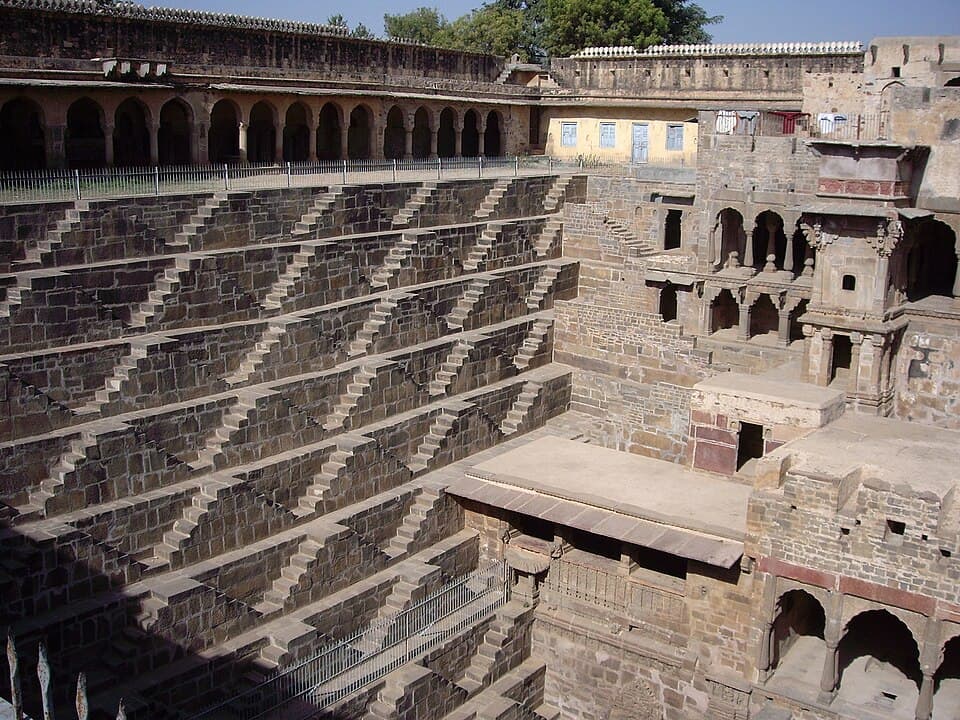
How it works
Deep subterranean wells; the descent into the earth plus the water surface creates a cool shaded refuge many degrees below ambient, while storing water and recharging groundwater. Adalaj Vav even draws air and light down the shaft.
Where it came from
Stepwells (vav in Gujarat, baori or baoli further east) spread across western India from roughly the 7th century, built by rulers and merchants as water infrastructure, cool refuge, and public architecture at once. Chand Baori at Abhaneri (9th century) descends thirteen storeys; Rani ki Vav at Patan is a UNESCO World Heritage Site carved like an inverted temple.
How it is built
Builders dug to the water table and lined the shaft with masonry, then wove flights of steps and colonnaded galleries down the sides so water stayed reachable in every season. The deep, shaded court and the water surface below keep the lower galleries several degrees cooler than the street; pavilions at each level made the descent a social space.
In a modern home
Sunken cool courts, basement cool-pits, combining water storage with a cool retreat.
What it answers
Built from
Go deeper
- Morna Livingston, Steps to Water: The Ancient Stepwells of India (2002)
- Victoria Lautman, The Vanishing Stepwells of India (2017)
Source
Studies of medieval stepwells confirm measurable passive cooling of surroundings.