Earth-sheltered cave dwelling
Born in China's Loess Plateau (Shaanxi, Shanxi, Gansu, Henan).
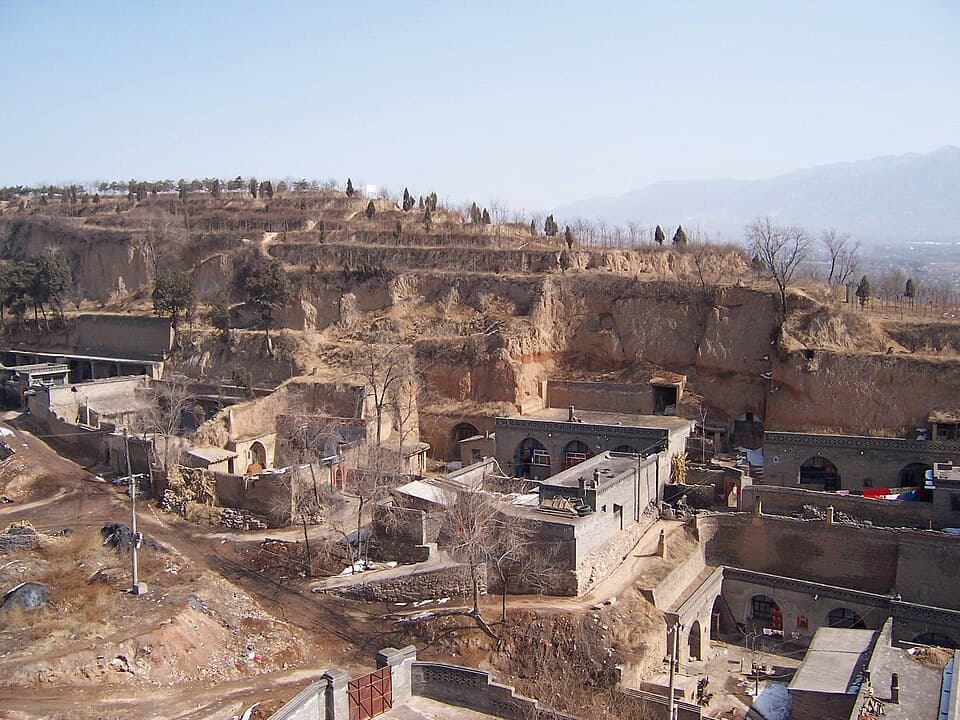
How it works
Homes excavated into thick loess hillsides; 0.5 to 2m of earth has very low conductivity and huge thermal inertia, damping the outside swing so interiors hold ~10 to 15°C year-round with near-zero heating or cooling.
Where it came from
Across China's Loess Plateau, tens of millions of people have lived in yaodong: rooms cut into the soft loess cliffs or arranged around sunken courtyards dug straight down into the plain. The form is millennia old and still inhabited at vast scale, one of the largest earth-sheltered housing traditions on Earth.
How it is built
A cliffside yaodong is excavated as a vaulted room eight to ten metres deep, faced with a brick or timber arch front; a sunken-courtyard version digs a square pit first, then carves rooms off each side. Several metres of earth overhead hold the interior near the ground's steady temperature: warm in the bitter winter, cool in the hot summer.
In a modern home
Earth-bermed / partially buried lower floors, green-roof earth cover, basement living in hot climates, high-mass party walls.
What it answers
Built from
Go deeper
- Gideon Golany, Chinese Earth-Sheltered Dwellings (1992)
- Ronald G. Knapp, China's Old Dwellings (2000)
Source
Field studies show indoor daily swings of only 2 to 5°C against outdoor swings over 20°C; Bronze Age origins.