Projecting lattice screen
Born in Arab world (Cairo, the Levant).
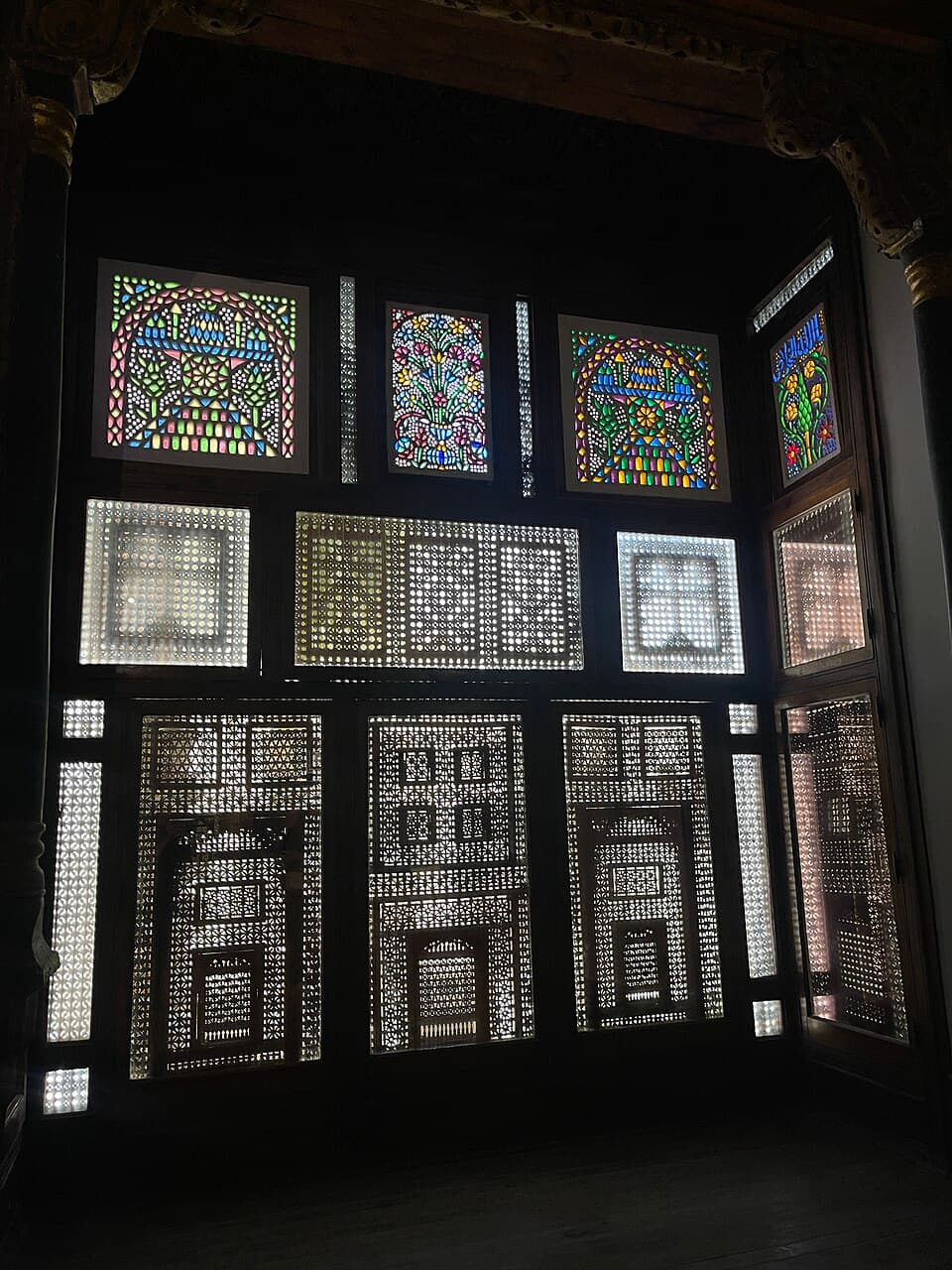
How it works
A projecting turned-wood lattice over a window breaks and accelerates airflow (small openings speed the breeze), shades the interior, controls glare and keeps privacy; porous water jars in the screen add evaporative cooling.
Where it came from
The turned-wood window screens of Cairo, Damascus, and the Hijaz reached their peak in the Mamluk and Ottoman centuries. The name is often traced to the drinking vessels once set in the screen: porous clay jars whose evaporation cooled both the water and the breeze passing over it, an air conditioner made of joinery and pottery.
How it is built
Thousands of small turned wooden balusters are joined without glue or nails into panels that tolerate the wood's movement in heat. The classic screen is graded: tight lattice at eye level for privacy and glare control, opening wider above to admit light and moving air. Bay projections let the screen catch street breezes from three sides.
In a modern home
Perforated façade screens, operable timber or metal lattice shutters, breeze-block / jaali skins on apartment balconies.
What it answers
Go deeper
- Hassan Fathy, Natural Energy and Vernacular Architecture (1986)
- John Feeney, 'The Magic of the Mashrabiyas', Saudi Aramco World (1974)
Source
Hassan Fathy, Natural Energy and Vernacular Architecture (1986), on the mashrabiya's shading and evaporative cooling.